‘Keep your friends close, keep your AI closer’: Information, Technology and Consulting office publishes guidelines for ‘safe’ workplace artificial intelligence use
Publish Date: 2026-05-22 05:07:00
Source Domain: www.thedartmouth.com
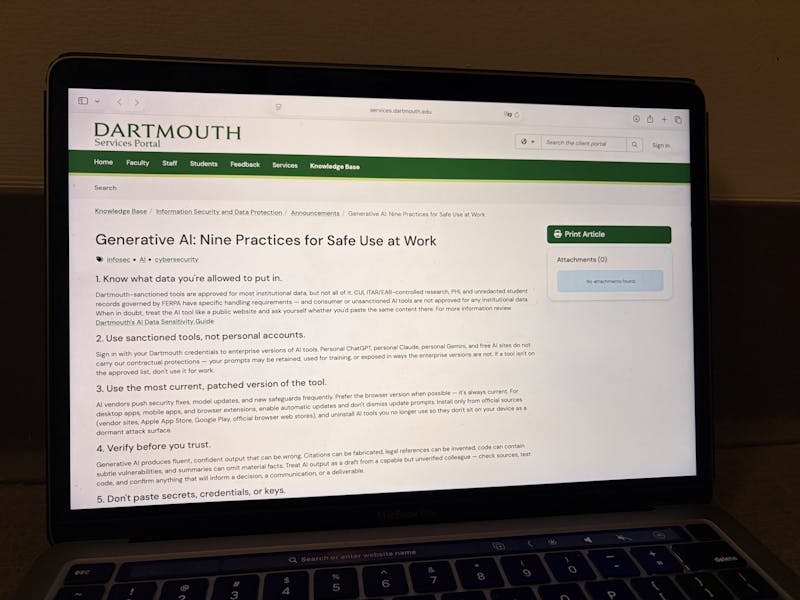
- On May 6, the Information, Technology and Consulting (ITC) office released nine updated guidelines for the use of generative artificial intelligence (AI) tools in the workplace.
- These guidelines were publicized six days after a chemistry professor unintentionally exposed student data via the Dartmouth Claude enterprise portal in a test of the system’s grading capabilities.
- The guidelines emphasize data handling precautions, including knowing what data to input into AI chats and not allowing AI to make consequential decisions about people without human oversight.
- Specific guidance is provided regarding the confidential nature of unredacted student records under FERPA, advising community members to question whether they would be comfortable sharing the information publicly.
- The ITC states these guidelines reflect a commitment to responsible AI use, aiming to promote safety and effective AI tool usage on campus.
- Faculty members, like English professor James Dobson and computer science professor Tim Tregubov, commend the guidelines and highlight the need for more specific training and guidance.
- The guidelines urge faculty to be transparent about their use of AI, in line with what they expect from their students, particularly in coding and written assignments.
- Student perspectives on AI usage vary, with many professors prohibiting its use in producing code, but allowing its use for learning concepts with clear disclosures.