Supply Chains Are Learning to Think and Act on Their Own
Supply Chains Are Learning to Think and Act on Their Own
Publish Date: 2026-03-11 13:48:00
Source Domain: www.pymnts.com
-
Structural Transformation in Supply Chain: The supply chain is undergoing a significant transformation driven by artificial intelligence (AI), moving from assisting human decisions to making and executing decisions autonomously in some cases.
-
Stages of Transition: The transition to an intelligent supply chain is a three-stage process:
- Stage 1: Companies replace manual processes with cloud systems for real-time visibility.
- Stage 2: Machine learning and simulation are used to anticipate disruptions.
- Stage 3: Few organizations have achieved complete autonomy where AI makes real-time decisions.
-
Potential Impact: AI has the potential to generate approximately $190 billion in value in travel and logistics and $18 billion in direct supply chain operations, analogous to the transformation brought by the shipping container to global logistics.
-
Performance and Execution Factors:
- Performance gaps between leading and lagging companies are influenced by:
- Clarity about decision support
- Process design around decisions
- Quality of underlying data
- Technology fit within workflows.
- Performance gaps between leading and lagging companies are influenced by:
-
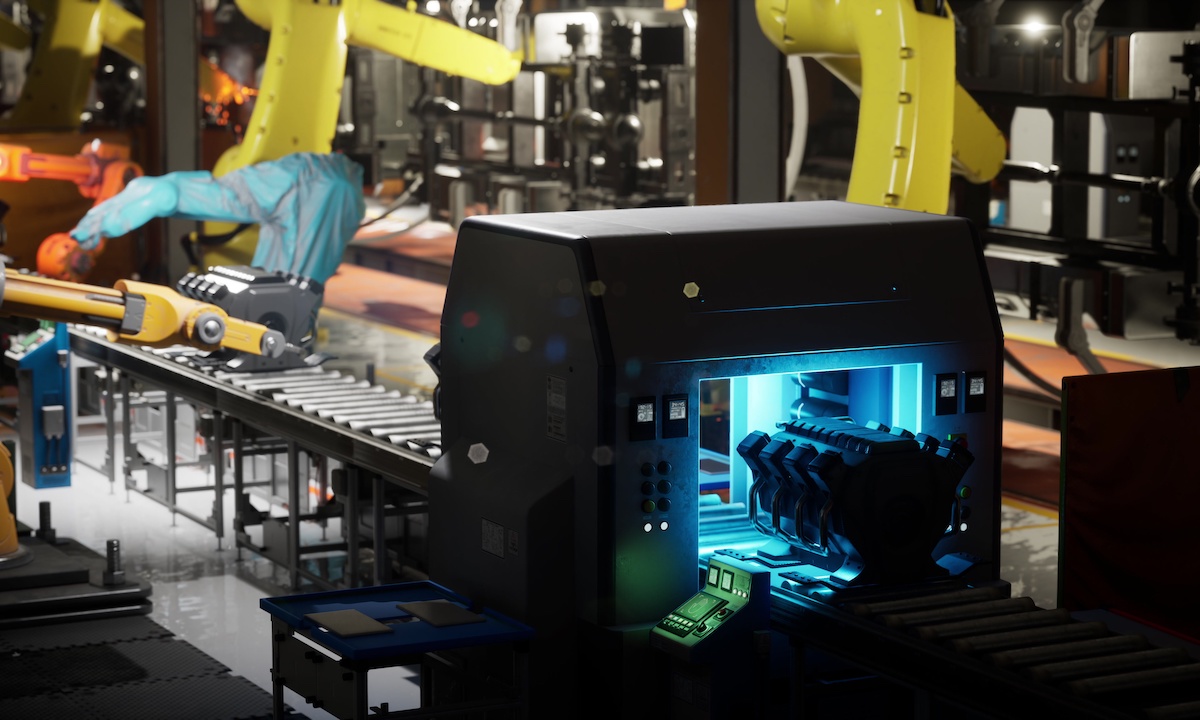
Physical AI in Warehouses: A shift is occurring where AI moves from servers and into warehouse machines, allowing robots and machines to adapt in real time and operate as a coordinated system, unlike traditional rigid automation.
-
Ecosystem and Network-Level Visibility: Most organizations still operate on incompatible systems, but advancements like agentic AI are improving network-level visibility and reducing disruption response times, with significant projections for further integration by 2028 and 2029.