The Future of AI Is Built, Not Owned — and the Real Revolution Begins Beyond the Screen FII Institute Site
Publish Date: 2026-06-21 10:53:00
Source Domain: fii-institute.org
-
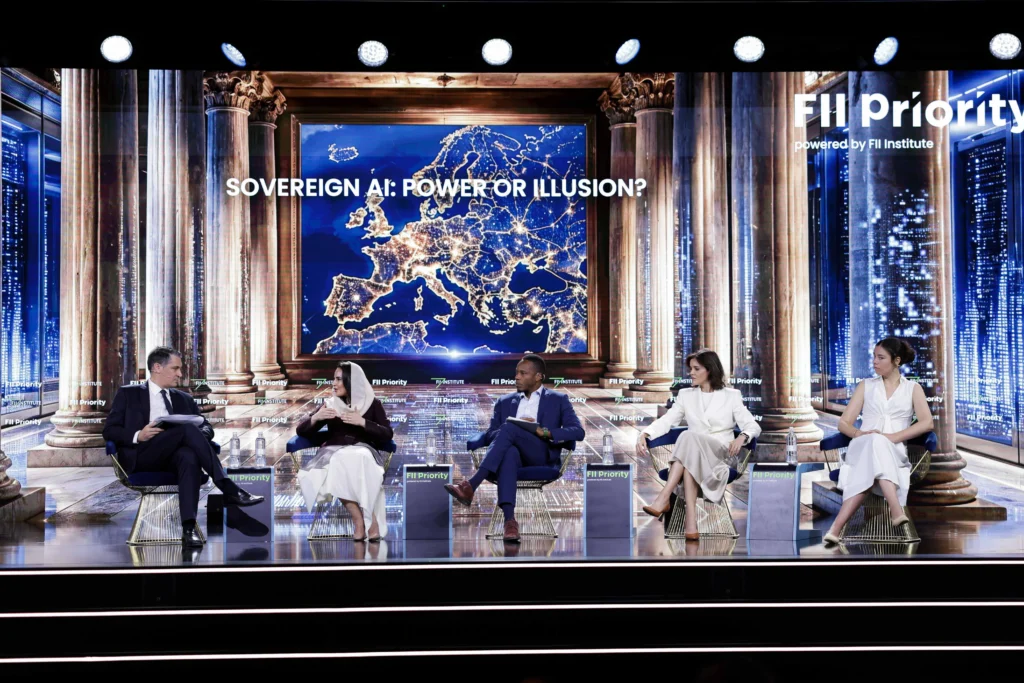
Sovereignty and AI: Sovereignty in AI encompasses investments in sovereign clouds, compute, models, and chips as countries aim to achieve control over foundational AI infrastructure to enhance competitiveness, security, and productivity.
-
Global Interdependence: Despite the drive for sovereignty, AI technologies are highly interdependent, as models can be trained, processed, manufactured, and deployed globally in ecosystems spanning multiple countries.
-
Rethinking Sovereignty: Joséphine Kant suggests rethinking sovereignty as leverage rather than control, emphasizing the importance of attracting talent and collaboration to enhance global innovation.
-
Distributed AI Infrastructure: David Moinina Sengeh proposes a distributed approach to AI infrastructure through concepts like data embassies to avoid concentrating critical data, thereby reducing vulnerability.
-
Regulatory Challenges: Travis Kalanick highlights the tension between regulatory processes and innovation deployment, suggesting that excessive regulation may delay beneficial technologies from reaching the public, citing autonomous driving as an example.
-
Shift in AI Value Creation: Jack Hidary points to a transformation driven by Large Quantitative Models (LQMs) aimed at solving real-world challenges in fields like medicine, defense, and materials, marking a significant shift in AI’s impact beyond language models.
-
AI-Driven Revolution in Real-World Applications: Emerging AI technologies, especially LQMs, promise transformative impacts in critical fields such as drug development, energy systems, and materials science, shifting AI’s value creation into the realm of physical reality.
-
Investment in AI for Real-World Solutions: Significant investments, like the $500 million from the U.S. government to enhance semiconductor manufacturing through AI, underscore the transformative potential of AI in solving complex, real-world problems.