Receptiveness of physicians towards artificial intelligence-driven drug prescription: a nationwide survey
https://www.nature.com/articles/s44401-026-00101-3
Publish Date: 2026-06-07 21:28:00
Source Domain: www.nature.com
-
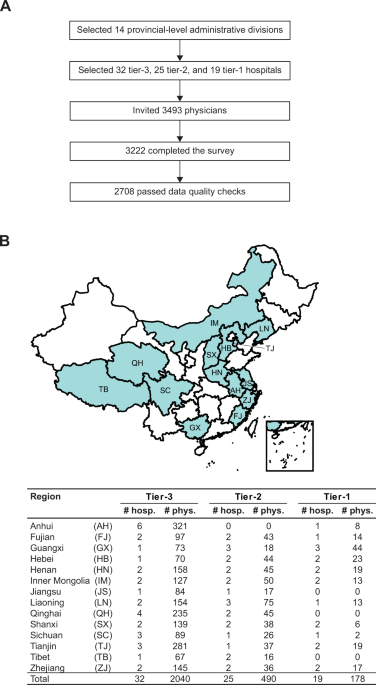
Sampling and Demographics: A survey conducted in 14 provinces in China involving 11,349 physicians, particularly using stratified sampling. Hospitals were classified into three tiers based on their level, and the survey included 2,708 returned, quality-checked questionnaires.
-
Physician Qualifications: The respondents were categorized based on ranks, namely chief physicians (14.1%), associate chief physicians (28.1%), and junior attending physicians (55.5%). The ratio of male to female physicians is 1.3.
-
AI Knowledge and Use: Most physicians indicated familiarity with AI (55.2%) and had experience using medical AI (85.3%). Male physicians are more likely to rate themselves as proficient in using medical AI.
-
Futuristic Outlook: A majority of the physicians expect AI to significantly transform healthcare (72%), augment physician capabilities, improve healthcare quality, enhance equity in healthcare access, and support physician training.
-
AI in Drug Prescription: Physicians perceive expedience and vetted efficacy as the most important technical attributes of AI-driven drug prescriptions. Many suggest AI should be used in settings with standardized guidelines or when extending current therapies.
-
Adoption Readiness: The majority of physicians expect their hospitals (82.1%) and themselves (78.2%) to be ready for adopting drug-prescribing AI within the next five years.
-
Psychological Profile-types: Survey respondents were classified into two psychological profiles: ‘optimists’ (50.1%) who are more receptive to AI’s potential, and ‘pragmatists’ (49.9%) who hold a more restrained view.
-
Underlying Determinants: Male physicians and those with higher self-assessed experience in using medical AI were more likely to be ‘optimists.’ The male sex’s effect on being an optimist is mediated by the level of medical AI experience.