How AI’s Growing Role in Nursing Raises Questions About Safety, Ethics, and Human Care
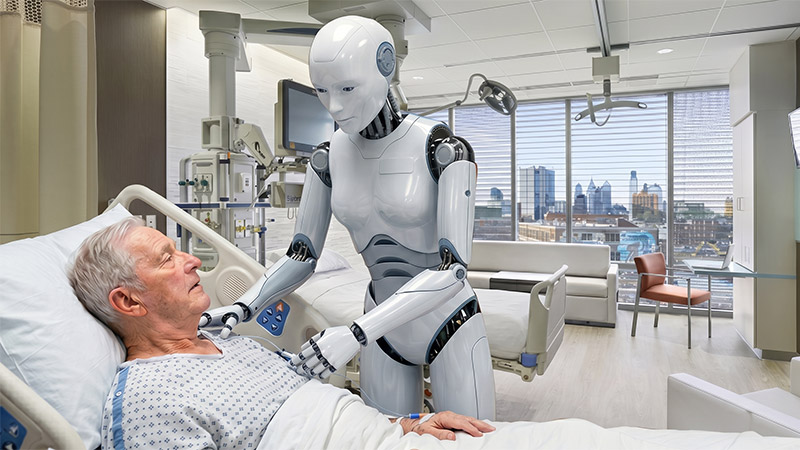
How AI’s Growing Role in Nursing Raises Questions About Safety, Ethics, and Human Care
Publish Date: 2026-05-27 05:43:00
Source Domain: ldi.upenn.edu
Here are 5 key points from the article outlining the potential, challenges, and implications of AI automation in nursing:
– Potential benefits of AI in nursing include reducing paperwork, improving patient monitoring, and providing new ways to analyze patient data and identify needs. However, there are also risks around bias, accountability, and privacy.
– Key barriers to using AI in nursing include lack of governance frameworks, integration into clinical workflows, low AI literacy among nurses, and ethical and transparency issues. Robust evaluation standards and accountability measures are needed.
– Major challenges emphasized by the paper include the inability of AI to replicate nursing functions like empathy and moral judgment, risks of biased or flawed AI systems, and ensuring ethical safeguards around patient privacy and data use.
– To mitigate these risks and ensure responsible use, the paper proposes guidelines like expanding AI education in nursing curriculum, integrating nurses into AI system design, rigorously testing AI systems, measuring real workload impacts, and building ethical oversight.
– The paper argues that nurse scientists must play a central role in the development, evaluation, and deployment of AI, with nurses as co-designers rather than peripheral users. For AI to enhance rather than undermine care, nurses must be integral at every stage.


