Yuheng Bu seeks a better way to ensure the trustworthiness of AI-generated text
Yuheng Bu seeks a better way to ensure the trustworthiness of AI-generated text
Publish Date: 2026-05-15 13:51:00
Source Domain: news.ucsb.edu
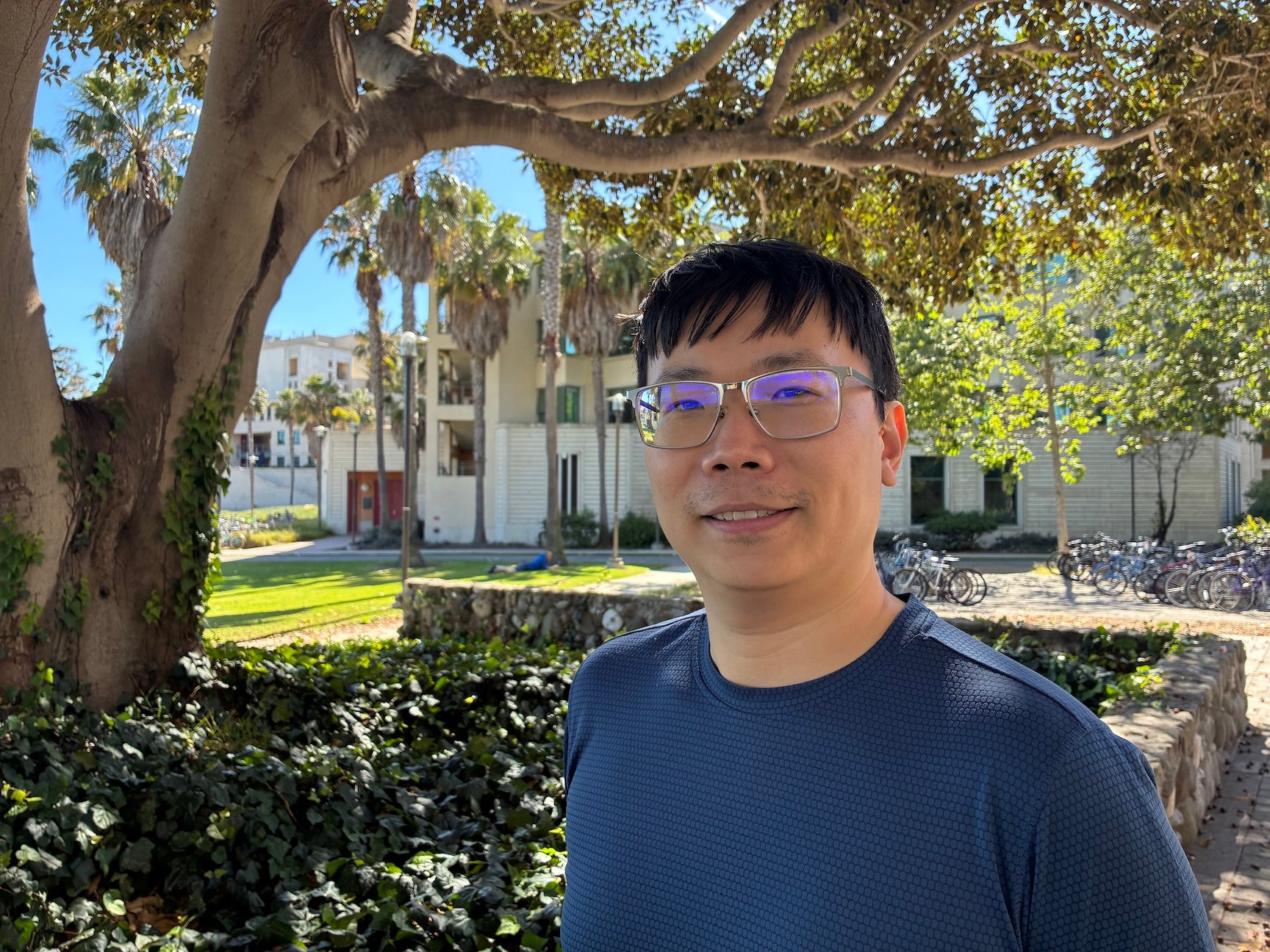
- Yuheng Bu, an assistant professor in UC Santa Barbara’s Computer Science Department, received a prestigious Early CAREER Award from the National Science Foundation (NSF).
- Bu’s project focuses on advancing watermarking techniques that securely and subtly embed traces into large language model (LLM)-generated text to identify the source and ensure content authenticity.
- His research aims to improve the limitations of existing binary watermarking methods by encoding richer metadata like model version, timestamp, and user-level information for more detailed forensic use.
- Bu’s approach seeks to address challenges like watermark removal through text translation or paraphrasing, and watermark forgery, by developing more robust and secure embedding strategies that preserve text quality.
- The ultimate goal of this research is to support the responsible use of generative AI in research, education, and society by enhancing intellectual property protection, trusted automated reviews, and secure AI communication.
- An educational component of Bu’s project includes interactive workshops and courses aimed at high school students, families, and teachers to promote early, hands-on learning in AI security and responsible AI system design.
- The research tackles the complex challenge of embedding multi-bit information during the LLM generation process without compromising the fluency and naturalness of the text, striving for a balance between information embedding and text quality.
- The distributional information embedding problem involves adjusting the probability distribution during LLM text generation to include hidden signals, distinguishing it from traditional post-hoc watermarking methods.
- Bu’s work emphasizes the trade-off between watermark robustness, the detectability of the watermark, and maintaining the naturalness of the generated text, with the aim of yielding reliable and secure watermarking solutions.
- “In-context” watermarking, a key aspect of Bu’s project, embeds watermarks through user prompts alone, exploiting LLMs’ in-context learning and instruction-following capabilities, without needing to modify model internals or decoding algorithms.