How understanding weather and climate risks depends on supercomputers like NCAR’s
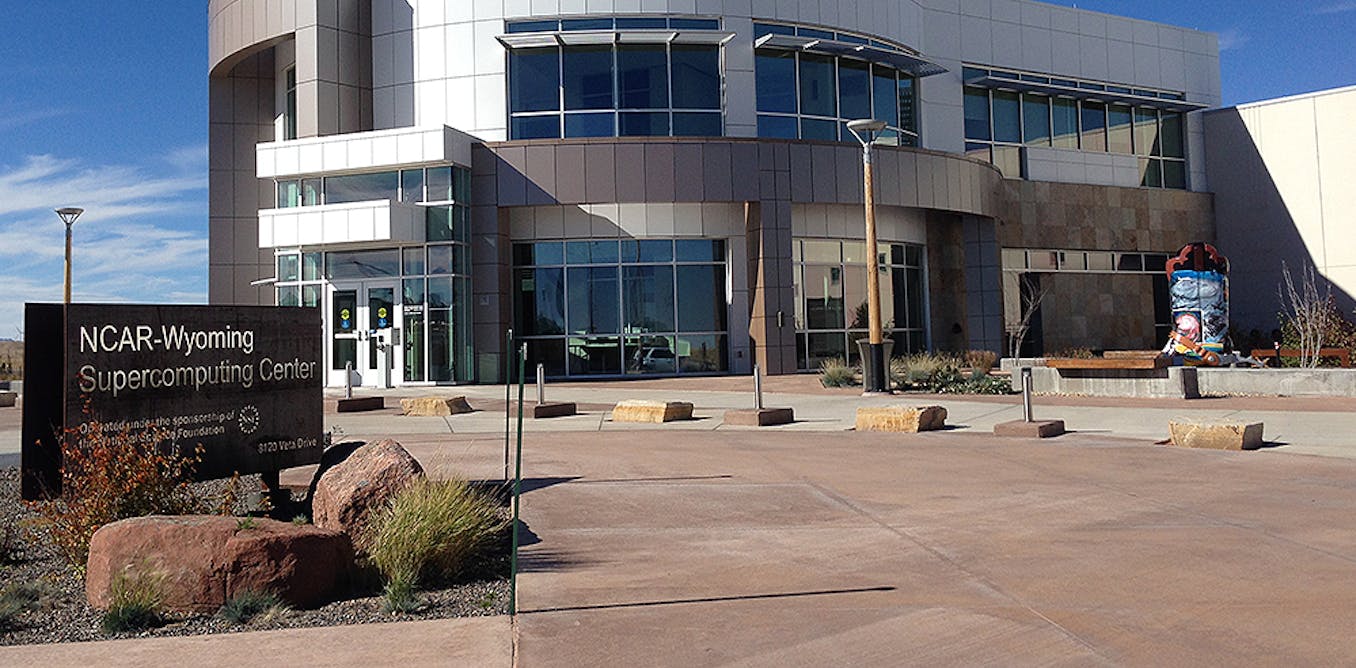
How understanding weather and climate risks depends on supercomputers like NCAR’s
Publish Date: 2026-02-25 08:21:00
Source Domain: theconversation.com
-
Complex Earth System Simulation
- The Earth system involves interconnected processes governed by physical laws.
- This complexity makes it difficult to fully understand with a single human mind.
- Slight disruptions can drastically alter the system’s trajectory over time, known as the “butterfly effect.”
-
Role of Climate Models
- Climate models are virtual representations of Earth used to simulate climate.
- They divide the Earth into 3D grids with numerous variables and apply physical laws and equations.
-
Computational Power Required
- Climate models run on supercomputers capable of carrying out quadrillions of operations per second to handle the vast complexity.
- Running multiple simulations with different initial conditions helps mitigate effects of chaos.
-
Global Collaboration in Climate Modeling
- Various modeling centers worldwide develop and run their own climate models.
- International projects coordinate experiments and compare results for consensus and validation.
-
Impact on Policy and Urban Planning
- Results from climate models inform infrastructure design, disaster planning, and policymaking.
- Models help determine flood defenses, power grid resilience, and water resource management.
-
Future Climate Projections
- Climate projections do not rely on historical data due to future conditions beyond past experience.
- AI can aid but cannot replace the fundamental physical equations that govern climate dynamics.
-
National Contributions to Climate Modeling
- Major centers like NASA, NCAR, and universities contribute to advanced climate model development.
- These models are crucial for studying climate change and severe weather, positioning the U.S. at the forefront of climate science.
-
Essential Tools for Preparing for Climate Risks
- Climate simulations are vital for preparing humanity for future climate risks.
- This large-scale scientific endeavor relies on national-level infrastructure and expertise.