Explainable AI needs formalization | npj Artificial Intelligence
Explainable AI needs formalization | npj Artificial Intelligence
https://www.nature.com/articles/s44387-026-00095-1
Publish Date: 2026-04-08 03:00:00
Source Domain: www.nature.com
-
Proposal for Regulation: The European Commission has proposed a regulation for harmonizing rules on artificial intelligence (AI) aiming to ensure trustworthy, secure, and ethically aligned AI systems across the Union.
-
Explainable AI (XAI): Research focuses on developing methods to make AI decisions more interpretable, addressing concerns about black-box methodologies through techniques like feature attribution and visualization.
-
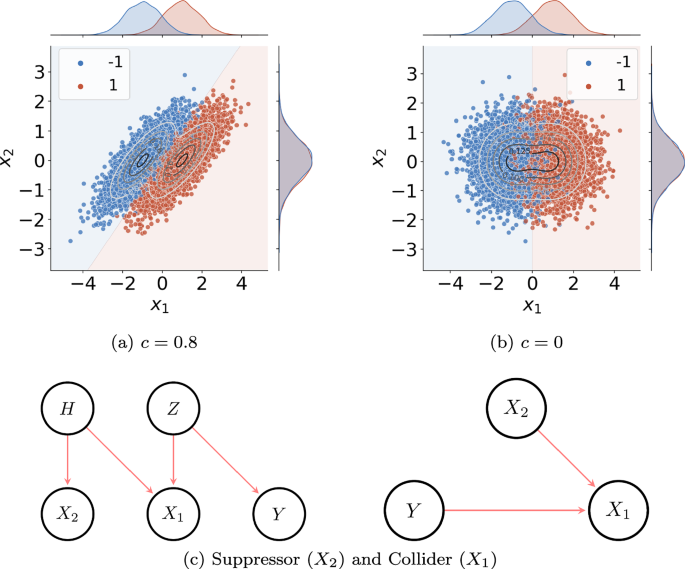
Evaluation Challenges: Many benchmarks and methodologies have been designed to evaluate the validity and utility of explainable AI techniques, addressing issues like the presence of suppressor variables in models.
-
Causality and Trustworthiness: Understanding causal relationships is crucial for developing more trustworthy and reliable AI systems, with several studies discussing approaches to incorporate causal knowledge into explainable AI.
-
Methods and Metrics: Various techniques such as Shapley values, linear models interpretation, and counterfactual explanations have been proposed, along with benchmark datasets to assess their performance and reliability.
-
Practical Applications: Explainable AI techniques are being explored in various domains including healthcare, cybersecurity, legal applications, and general AI-driven decision-making systems for improving transparency and trust.
-
Critical Perspectives: There is an evolving discourse on the limitations and misconceptions in current XAI research, highlighting the need to move beyond simple explanations towards more robust and accurate interpretability.
-
Future Directions: The research emphasizes the importance of developing a more nuanced understanding of explainability, moving towards post-XAI paradigms that address the insufficiency of current methods in real-world applications.