KFF Tracking Poll on Health Information and Trust: Use of AI For Health Information and Advice
KFF Tracking Poll on Health Information and Trust: Use of AI For Health Information and Advice
Publish Date: 2026-03-25 05:03:00
Source Domain: www.kff.org
-
AI Usage for Health Information: Approximately 32% of adults are using AI tools for health information and advice, with 29% seeking physical health advice and 16% seeking mental health advice in the past year.
-
Demographic Trends: Younger adults, uninsured adults, and minority groups (Black and Hispanic) are more likely to use AI for mental health advice compared to older, insured, and White adults.
-
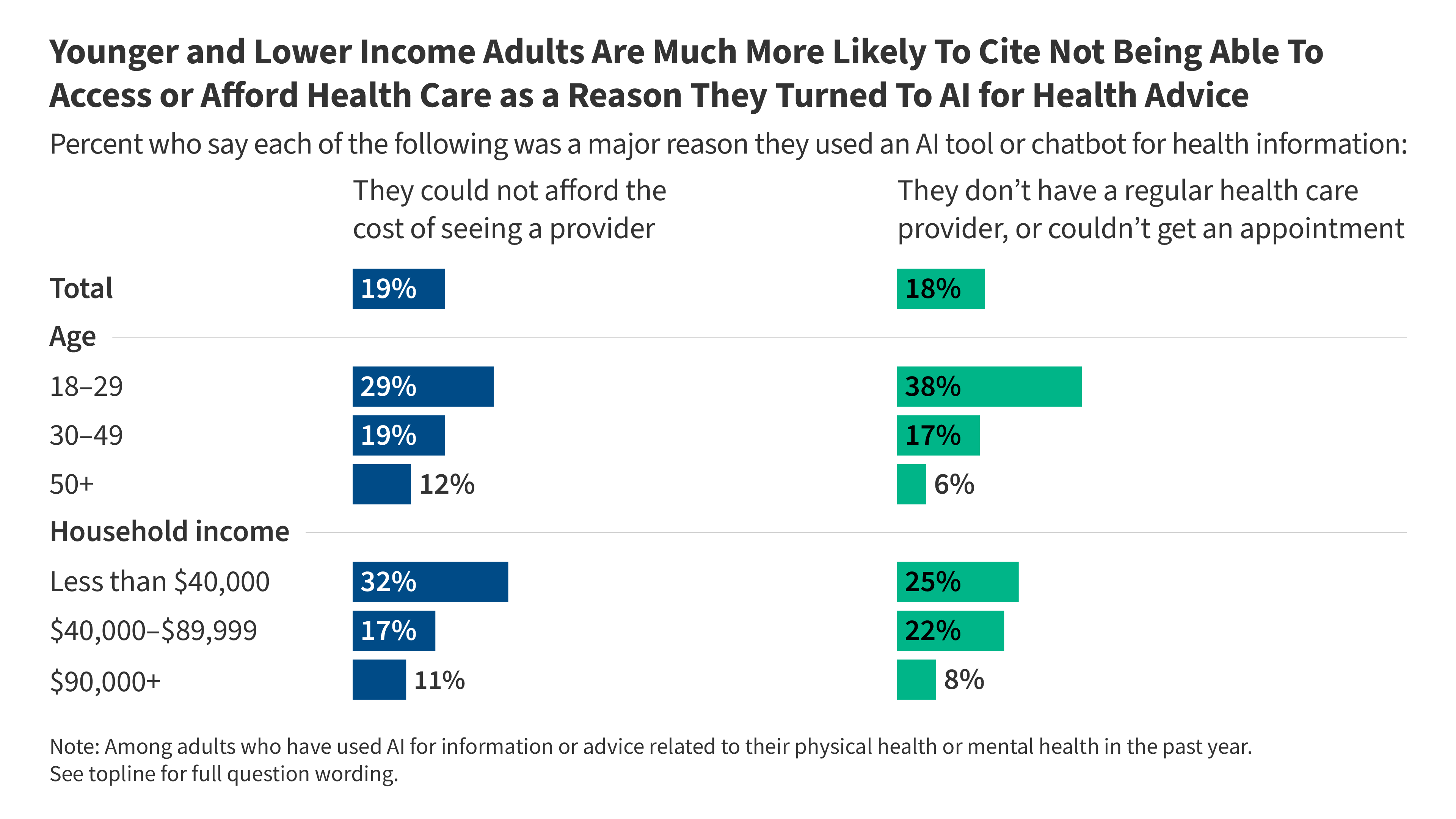
Driving Factors: Most AI users (65%) want quick and immediate health advice, many to research before seeing a healthcare provider (41%) or because they feel more comfortable looking up health questions privately (36%). Some also face difficulties accessing or affording healthcare.
-
Privacy Concerns and Data Upload: While 77% of the public is concerned about the privacy of personal medical information shared with AI tools, 41% of those using AI for physical or mental health still upload personal medical data, indicating a complex relationship with privacy concerns.
-
Satisfaction and Trust: Despite privacy worries, most AI users are somewhat satisfied with the quality of health responses (92% for physical health, 85% for mental health). Trust in AI for health information varies, being higher among users and lower among non-users.
-
Usage Patterns: Most users seek general health information or symptoms (27%) about physical health and advice for mental health issues (11%) through AI tools.
-
Consultation Follow-up: While most users follow up with healthcare providers after AI consultations, younger adults are more likely not to follow up after AI interactions compared to older adults.
-
Reliability Perception: While about 18% believe AI is as reliable as healthcare providers, 65% consider this a minor reason for using AI.