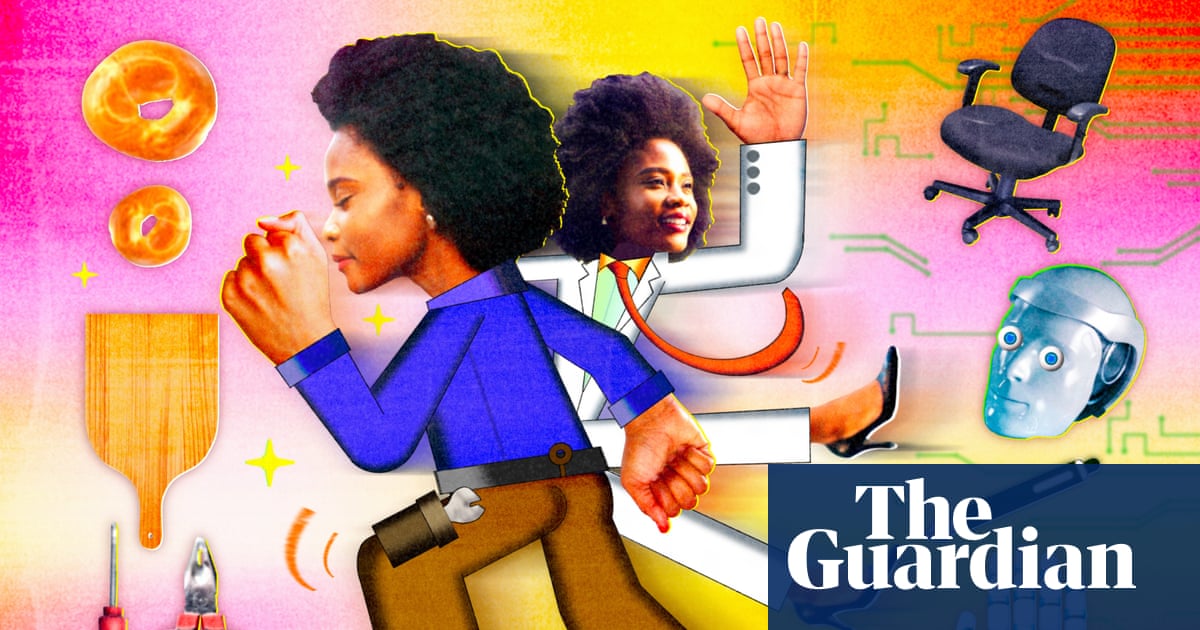
The big AI job swap: why white-collar workers are ditching their careers | AI (artificial intelligence)
Publish Date: 2026-02-11 00:00:00
Source Domain: www.theguardian.com
Here are the key points from the article:
– Jacqueline Bowman, a California-based writer, had to retrain to become a therapist after her writing career was impacted by AI. Her work now involves fact-checking AI-generated content, which is more time-consuming.
– Janet Feenstra, a former academic editor in Sweden, retrained to become a baker because of fears that AI would soon replace her job. She now works in a bakery but has taken on a more physically demanding job with lower pay.
– Richard, a former occupational health and safety professional in the UK, retrained as an electrical engineer due to concerns that AI could replace many of his job’s tasks.
– There has been a shift towards vocational training and trades, as many fear their academic careers may be impacted by AI. Experts note that manual and skilled trades work is more resistant to automation.
– Some worry that AI job displacement will disproportionately affect entry-level and lower-skilled jobs. However, experts caution against panic, noting humans still retain certain advantages over AI.
– Experts stress that while AI will likely impact many jobs, becoming adept at working with AI will be a valuable skill. Some have chosen to develop AI skills themselves to adapt to the changing job market.
– Many have had to rethink and redefine what careers they pursue in light of AI’s potential impact. Some had to move into physically demanding “AI-proof” jobs, which may take a toll on their health.
– The importance of social skills and expert knowledge is likely to grow, as humans still prefer interacting with and trusting other humans in many areas.