Family Offices Face New Era of Cybersecurity, AI Governance, And Operational Resilience

Family Offices Face New Era of Cybersecurity, AI Governance, And Operational Resilience
Publish Date: 2026-06-23 08:07:00
Source Domain: www.familywealthreport.com
Using an unordered list, summarize the following article with between 4 and 8 key points. Technology is not a back-office concern for family offices any longer, and these organizations must adapt accordingly.
This article stems from the recent
cybersecurity forum hosted by Family Wealth
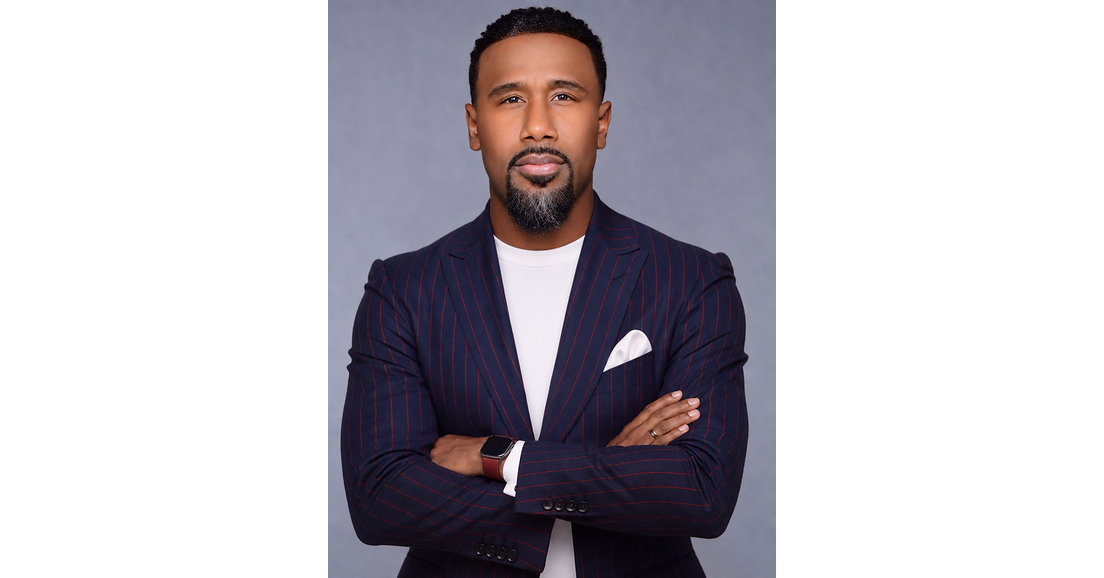
Report in New York City. The author is Warren Finkel (main
picture) of Omega
Systems.
Family offices used to treat technology as a back-office concern.
That”s changed. Cybersecurity, AI adoption, infrastructure
modernization, and operational resilience now sit at the center
of business strategy, shaping how well a family protects assets,
maintains trust, and operates through disruption.
That was the central message at the 2026 Family Wealth Report
Cybersecurity Forum, where Omega Systems presented findings from
its 2026 Outlook for Family Offices Industry Briefing.
The briefing draws on Omega’s 2025 Financial Services Cyber
Resilience Survey of more than 300 financial services leaders,
including family office executives and technology
decision-makers; it reflects patterns the company sees regularly
in its work with family offices across the country.
The office hasn’t stayed the same, but the security
has
Consider how secure connectivity has changed. A family office’s
operating environment today looks nothing like it did even a few
years ago. Advisors work remotely. Executives travel frequently.
Teams collaborate across locations, devices, and cloud platforms.
Many of the security architectures protecting them, however, were
built for a single office with a defined perimeter.
That mismatch is part of why Secure Access Service Edge (SASE)
and Zero Trust models have gained ground across financial
services. Rather than trusting a user because they’re inside the
network, these approaches continuously verify users, devices, and
access privileges no matter where someone is working. For family
offices, the appeal isn’t just better network security. It’s a
foundation flexible enough to support mobility, cloud adoption,
and outside collaboration as those needs keep evolving.
Confidence hasn’t caught up to concern
The survey data points to a gap between what family offices
recognize and what they’re prepared to handle. Seventy-two per
cent of family office respondents believe they’re targeted
more frequently because they manage high net worth assets and
sensitive financial information. Eighty-three per cent are
concerned about deepfakes and other AI-powered impersonation
attempts aimed at executives, advisors, and trusted contacts.
Yet only 60 per cent said they were confident in their employees’
ability to detect and prevent AI-powered attacks – a figure that
trails both the broader financial services industry and RIA
firms. Awareness is high, but readiness lags it.
That gap matters because resilience isn’t only about keeping
attacks out. It’s about what happens after one gets in.
Sixty-seven per cent of family office respondents said legacy
systems and outdated infrastructure would slow their recovery
from a cyber incident, and 78 per cent said a successful attack
could trigger reputational damage, investor concern, or
withdrawals. A cybersecurity incident rarely stays a technology
problem for long. It becomes a question of relationships and
confidence.
AI Is already in the building
AI came up repeatedly at the forum, and for good reason.
Financial services firms are already using AI tools to accelerate
research, summarize information, and improve productivity,
so lean family office teams stand to gain the most from that
kind of leverage.
The risk is that adoption is outpacing governance. Employees are
folding AI tools into daily workflows well before most
organizations have settled on approved platforms or rules for
handling sensitive information. For a family office managing
confidential investor data and proprietary investment strategies,
that’s not a minor gap to leave open.
AI is reshaping the threat side of the ledger too. Deepfake
impersonation, AI-generated phishing, and more convincing social
engineering are showing up more often, and they don’t fit neatly
into security playbooks written before generative AI existed.
The takeaway isn’t slowing down AI adoption. It’s to govern it
proactively and intentionally – approving specific platforms,
setting clear rules for what can and can’t be shared with AI
tools, and keeping a human in the loop on anything AI produces.
Fewer tools, tighter operations
A common thread runs through these conversations: family offices
want less complexity, not more technology. Many are moving away
from a patchwork of disconnected IT and security tools toward
something more unified, where identity security, endpoint
protection, monitoring, and user support all operate under one
strategy instead of several.
That consolidation tends to pay off in adaptability. When the
underlying systems are standardized, a family office can respond
to a new regulation, a new threat, or a new business need without
untangling five vendor relationships first.
What sets the leaders apart in 2026
The family offices that come out ahead this year won’t be the
ones with the biggest technology budgets. They’ll be the ones
that paired smart AI adoption with real governance, and that
treated infrastructure modernization as a deliberate decision
rather than something to defer.
The risks family offices face are evolving quickly, but so is the
opportunity to get ahead of them. A security-first approach to
modernization gives these organizations room to take advantage of
new technology without losing the trust that’s always been the
real asset under management.
About the author
As MD of Omega Systems’ Northeast Region, Warren Finkel has
decades of experience and deep-rooted relationships within the
financial services sector. He founded ACE IT Solutions, which he
led and founded for 14 years. The business was acquired by Omega
in 2022. Finkel has cultivated a reputation for delivering
bespoke IT solutions to family offices, private equity firms,
hedge funds, RIAs, and alternative asset firms.


/2d%20illustration%20of%20Cloud%20computing%20by%20Blackboard%20via%20Shutterstock.jpg "Stocks Slide as Artificial Intelligence Frenzy Eases")