5 Small Language Models for Agentic Tool Calling
5 Small Language Models for Agentic Tool Calling
https://www.kdnuggets.com/5-small-language-models-for-agentic-tool-calling
Publish Date: 2026-06-06 15:21:50
Source Domain: www.kdnuggets.com
Summary
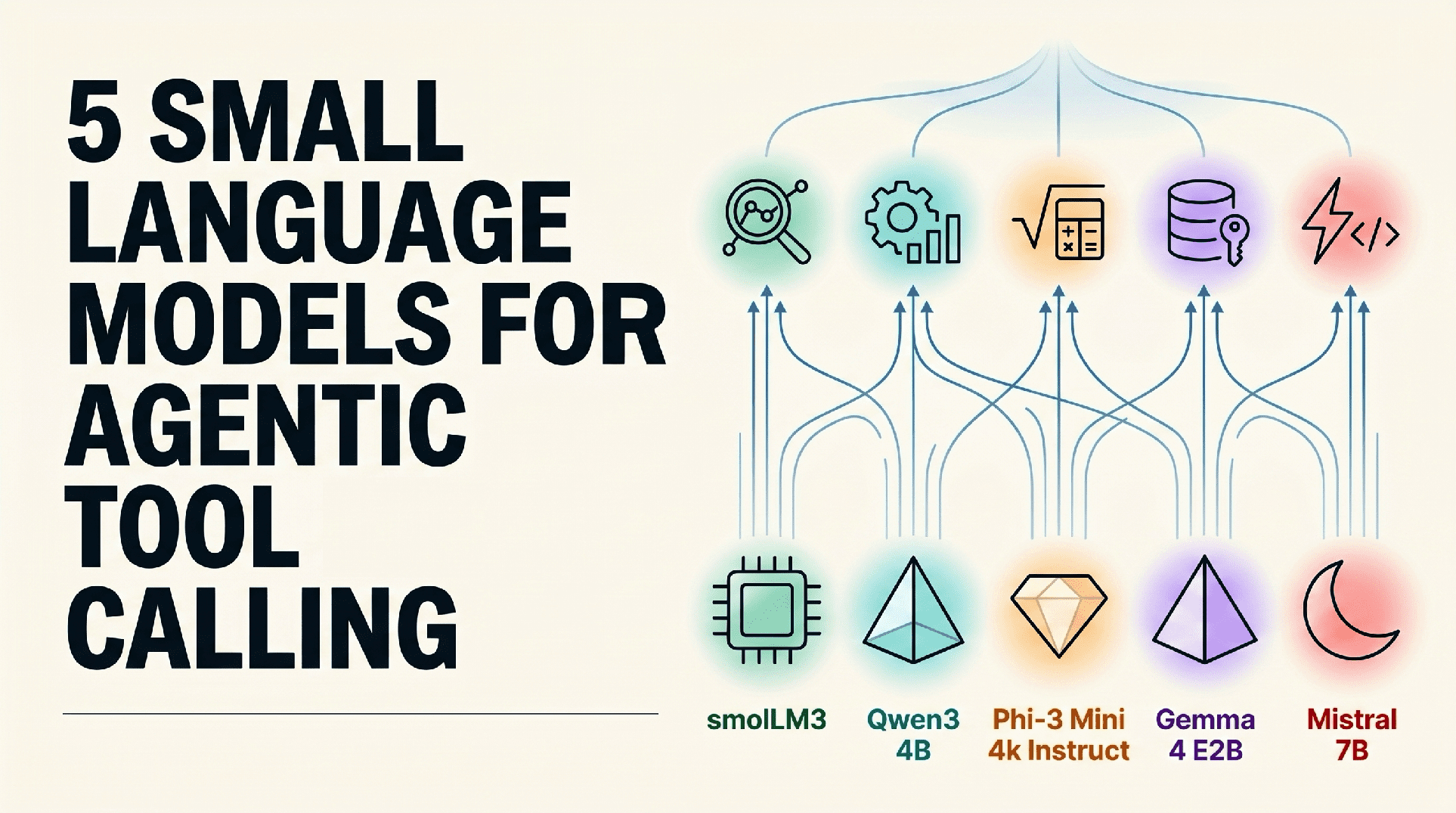
The document discusses the importance and intricacies of agentic AI systems that rely on a model’s ability to effectively call tools by correctly formatting arguments and integrating results into multi-step workflows. While large frontier models like ChatGPT offer superior performance, they are impractical for many real-world applications due to high costs and resource requirements. However, compact, open-weight small language models now offer first-class tool-calling support without requiring data center facilities. The article profiles five small language models suited for agentic tool calling: SmolLM3-3B, Qwen3-4B-Instruct-2507, Phi-3-mini-4k-instruct, Gemma-4-E2B-it, and Mistral-7B-Instruct-v0.3. Each model is equipped with varying technical details and advantages—such as long context windows, multilingual support, and flexible licensing—making them suitable for different agentic use cases from chatbots to on-device tasks.
Key Points:
- Agentic AI System Dependency: Smaller models are increasingly adept at tool-calling and integrating results into workflows, though they come at a fraction of the cost, latency, and resource needs of large models.
- Small Language Models Overview: The article highlights five notable models: SmolLM3-3B, Qwen3-4B-Instruct-2507, Phi-3-mini-4k-instruct, Gemma-4-E2B-it, and Mistral-7B-Instruct-v0.3, which showcase various technical enhancements like long context lengths, multiple-language support, and flexible licensing.
- Application Suitability: These models are specifically optimized for different needs, making them invaluable for real-world deployments such as on-device inference, long context workflows, and multimodal applications.
- Open-Access Advantage: With open licensing and openly shared datasets and training codes, these models provide a cost-effective and accessible alternative to large models, democratizing advanced AI capabilities.
- Broad Tool-Calling Support: Each model supports structured tool-calling, ensuring they are well-suited for modern, agentic applications and streamlining workflows.