Frontier AI Cybersecurity Threat Warned to Congress | Legis1

Frontier AI Cybersecurity Threat Warned to Congress | Legis1
https://legis1.com/news/frontier-ai-cybersecurity-threat-poses-urgent
Publish Date: 2026-06-09 10:53:00
Source Domain: legis1.com
Using an unordered list, summarize the following article with between 4 and 8 key points. Why It Matters
The House Homeland Security Subcommittee on Cybersecurity and Infrastructure Protection held a hearing on June 4 on how frontier AI models are reshaping the cybersecurity threat landscape, just days after President Trump signed an executive order establishing a voluntary framework for government access to frontier AI models. Democrats argued the voluntary approach was dangerously insufficient, while witnesses warned that adversaries are already inside U.S. critical infrastructure, and AI is collapsing the timeline to exploit it.
The Big Picture
The hearing was the latest in a deliberate investigative sequence by Subcommittee Chair Rep. Andy Ogles IV (R-TN), who opened a joint investigation with the Select Committee on China into Chinese AI model proliferation and held a January 2026 hearing on offensive cyber capabilities. The June 4 session deepened that record, focusing specifically on frontier models, agentic AI systems, and AI coding tools.
Trump’s executive order, signed June 2, directed the Secretaries of the Treasury, Homeland Security, and Defense to develop a classified AI benchmarking process and a voluntary framework for early government access to frontier models. Ogles called the president’s action appropriate, but signaled the subcommittee would closely monitor how CISA executes its responsibilities under the order.
What They’re Saying:
The sharpest exchange came when Ranking Member Rep. Delia Ramirez (D-IL) pressed Guariglia on accountability for autonomous AI systems managing critical infrastructure. Asked directly who would be legally responsible if an agentic AI managing a city’s water system made a catastrophic error, Guariglia replied flatly: “I don’t know who’s responsible under current law.” The moment drew no rebuttal from the dais. It simply hung there.
Rep. Seth Magaziner (D-RI) pressed on whether the executive order’s voluntary framework was adequate, noting that major financial institutions had privately told him Anthropic’s AI model found thousands of previously unknown vulnerabilities in their systems. “What’s to stop them from just selling it to the highest bidder?” he asked. Cable acknowledged that open-weight models already lag frontier models by only a few months, suggesting adversaries don’t need to wait.
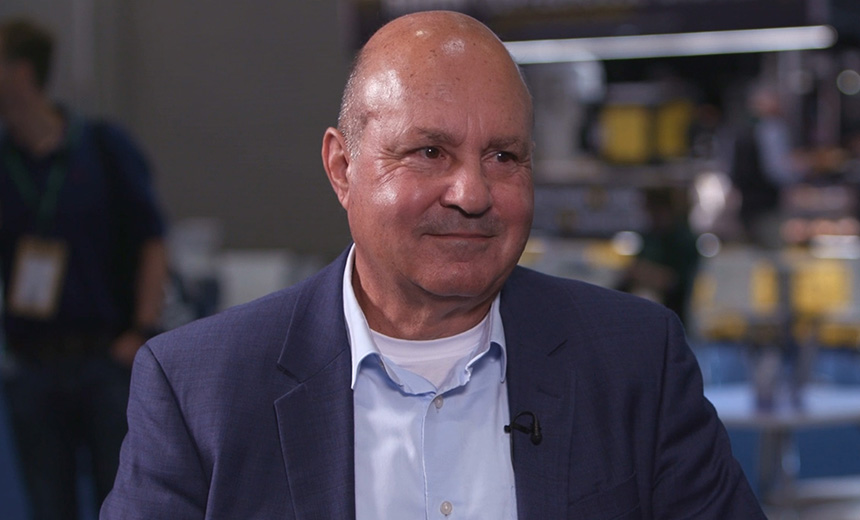
Chris Meserole, Executive Director, Frontier Model Forum, representing Anthropic, Amazon, Google, Meta, Microsoft, and OpenAI, argued that the capability surge was foreseeable. “If the most recent models caught us off guard, that should serve as a wake-up call,” he said, calling for stronger public-private information-sharing rather than new mandates. He flagged “adversarial distillation,” in which foreign actors train models on outputs of U.S. frontier models to replicate capabilities without safety guardrails, as a threat requiring urgent attention. He noted that antitrust constraints have prevented even basic industry conversations about how to counter the practice.
Joyce testified that Google had confirmed, for the first time, evidence of AI being used by cybercriminals to develop a zero-day exploit. She described a four-step autonomous defensive framework, arguing the U.S. must shift from reactive patching to continuous, automated remediation. Cable offered the most pointed data: of 1,500 vulnerabilities disclosed via Anthropic’s AI model, only 6 percent have been fixed. GitHub reported 14 times more code committed in 2026 than in 2025, with Google reporting 75 percent of its new code is AI-generated. Cable’s own data showed 13 percent of agent-generated code changes contain vulnerabilities.
Political Stakes
The hearing puts CISA in a difficult position. The agency has statutory authority under the Cybersecurity Information Sharing Act of 2015 and operates the Known Exploited Vulnerabilities catalog, but Ogles made clear the subcommittee will scrutinize how CISA translates early model access into practical guidance for rural hospitals, community banks, and local utilities. That oversight posture is complicated by the administration’s broader deregulatory posture on AI, which began with Trump revoking Biden-era AI safety testing requirements on his first day in office.
For the Electronic Frontier Foundation, the stakes are more structural. Guariglia argued the executive order creates a “tiered regime” in which companies in good standing with the administration receive access to frontier cybersecurity tools while others are sidelined. He also raised the practice of “zero-day hoarding,” in which government-deployed AI finds vulnerabilities in critical infrastructure but withholds that information to preserve future surveillance opportunities, pointing to the NSA’s handling of the EternalBlue vulnerability as a prior example.
For Google, Joyce’s testimony positioned the company as a willing partner in the administration’s framework while carefully avoiding any admission that Google’s own models have been misused. Google’s public AI threat tracker, which it publishes quarterly, was cited repeatedly as a model for transparency.
Guariglia pushed back on the bipartisan consensus that U.S.-origin models are inherently safer than Chinese alternatives.
“I would just urge that we think about U.S.-based models in the same vein as those coming from places overseas like China,” he said, arguing that absent consumer privacy laws and surveillance restrictions, both present civil liberties risks.
That argument found little traction with Republican members but drew visible attention from Ramirez and Magaziner, who used their time to probe Section 702 of the Foreign Intelligence Surveillance Act, which Guariglia argued is not written to protect Americans from AI-amplified surveillance. Section 702 is set to expire imminently, and Ramirez noted the president has appointed a new acting Director of National Intelligence, whom she characterized as having a record of targeting political opponents.
What’s Next
The subcommittee record will remain open for 10 days for written follow-up questions. The executive order’s 30-day deadline for establishing an AI cybersecurity clearinghouse falls in early July, giving the subcommittee a near-term oversight hook. Magaziner raised the possibility of legislation to make the vetting framework mandatory and questioned where the function should be housed, noting draft proposals to place it at Commerce, Treasury, or CISA. No markup has been scheduled.
The Bottom Line
Congress is debating deploying autonomous AI across critical infrastructure without a settled law on who is liable when it fails.
Access the Legis1 platform for comprehensive political news, data, and insights.