Three highlights in latest DHS spending bill
Three highlights in latest DHS spending bill
https://federalnewsnetwork.com/budget/2026/06/three-highlights-in-latest-dhs-spending-bill/
Publish Date: 2026-06-05 20:29:00
Source Domain: federalnewsnetwork.com
Using an unordered list, summarize the following article with between 4 and 8 key points.
The House Appropriations homeland security subcommittee advanced the 2027 spending bill on Friday, as reconciliation funding for ICE and CBP also moves forward.
Justin Doubleday@jdoubledayWFED
June 5, 2026 2:44 pm
3 min read
Congress just passed fiscal 2026 appropriations for most of the Department of Homeland Security in May, but lawmakers are already moving forward with crafting a 2027 budget for DHS.
The House Appropriations Committee’s homeland security subcommittee passed its version of the 2027 DHS spending bill on Thursday. The Republican-led committee passed the bill along party lines.
The DHS spending bill’s specifics, particularly around border security and immigration enforcement agencies, could change as Republican leaders move forward with a new reconciliation bill.
Early Friday morning, the Senate passed the $70 billion reconciliation measure. It would fund Immigration and Customs Enforcement and Customs and Border Patrol for the next three years, through the end of President Donald Trump’s term.]]>
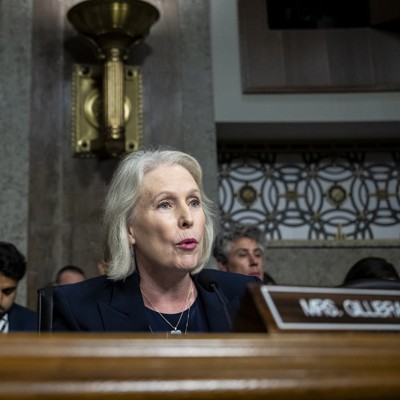
“Next week the House will likely take it up, but reconciliation is not the way we should fund regular operations of agencies,” Homeland security subcommittee Chairman Mark Amodei (R-Nev.) said at Friday’s hearing.
ICE and CBP are technically still under a lapse in appropriations. Those agencies were not funded under the 2026 DHS appropriations agreement that passed in May. But both still have money from the 2025 reconciliation bill, the “One Big Beautiful Bill Act,” to fund most of their respective operations.
While reconciliation and further disagreements over immigration enforcement will likely complicate its path forward, the House subcommittee’s legislation is still an important marker of where DHS budget priorities could be headed in the next appropriations cycle. Here are three highlights in the 2027 bill:
CISA budget
The subcommittee’s bill includes $2.4 billion for the Cybersecurity and Infrastructure Security Agency next fiscal year. That’s $400 million more than what the Trump administration requested for CISA’s budget.
The proposed CISA funding includes $694 million for cyber operations, $378 million federal and critical infrastructure cybersecurity programs, and $31 million to hire “mission critical positions to counter threats from foreign adversaries, such as China,” according to a summary of the budget provided by the House Appropriations Committee.
CISA is hiring again after losing roughly one-third of its staff over the past year. During a House Homeland Security Committee hearing earlier this week, Homeland Security Secretary Markwayne Mullin said CISA needs about 600 more staff than it has today.
DHS IG budget
The House bill also rejects the Trump administration’s proposal to cut the DHS inspector general’s budget. The appropriations measure would allocate $227 million for the DHS Office of the Inspector General. That’s largely a flat budget for the IG when accounting for extra, multiyear funding Congress passed in 2026 for oversight of immigration detention and last year’s reconciliation bill.]]>
The White House’s request, meanwhile, would cut the DHS OIG’s budget to $198 million in 2027. Budget justification documents show that would require the IG’s office to cut 85 full-time employees.
The proposed cut would “impact the OIG’s capacity to perform oversight of the Department’s operations,” the documents state. That includes its ability to “respond to the risk of fraud, waste, and abuse in DHS programs and operations; undertake congressionally requested audits, inspections, and investigations; and assist the department in accomplishing its public safety and national security mission,” the budget documents continue.
FEMA grants
The spending measure would allocate $34.1 billion to the Federal Emergency Management Agency. That includes $28.3 billion for FEMA’s Disaster Relief Fund.
The House subcommittee largely rejected the White House’s proposal to cut FEMA’s non-disaster grant programs by $1.3 billion. The bill allocates:
$506.5 million for the State Homeland Security Grant Program, instead of the $351 million in the Trump administration’s budget request.
$599 million under the Urban Area Security Initiative, instead of the $415.5 million in the budget request.
$315 million for the Nonprofit Security Grant Program, instead of the $274.5 million in the request.
$702 million for Assistance to Firefighter Grants, rather than $648 million in the budget request.
The bill also allocates $415.3 million for FEMA’s training, exercises, technical assistance and other programs, more than double what the administration had proposed. Those programs include the U.S. Fire Administration, the Emergency Management Institute and the Center for Domestic Preparedness.
Copyright
© 2026 Federal News Network. All rights reserved. This website is not intended for users located within the European Economic Area.