Cornell engineers use tiny vibrating beams to rethink AI hardware
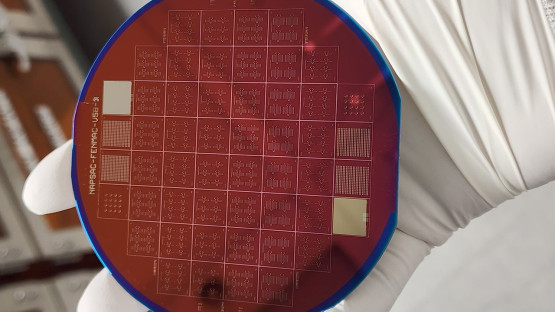
Cornell engineers use tiny vibrating beams to rethink AI hardware
Publish Date: 2026-06-01 11:29:00
Source Domain: news.cornell.edu
-
Innovative Computing Device: Cornell researchers developed a new type of computing device that stores information electrically and reads it through tiny mechanical motion, an unconventional approach that could lead to more energy-efficient hardware for AI and scientific computing.
-
FeMEMS Technology: The device utilizes ferroelectric microelectromechanical systems (FeMEMs), combining ferroelectric materials with microscopic vibrating beams to access stored analog information without relying on conventional electrical readout mechanisms.
-
Neuromorphic and In-Memory Computing: The device is designed for neuromorphic computing, which mimics brain-like information processing, and more broadly, to integrate memory and computation directly for efficient parallel processing.
-
Efficient AI Computations: The novel approach aims to reduce the energy expenditure in conventional computing by performing computation and data storage concurrently within the same material structure, decreasing the need for data movement over long distances.
-
Reduced Errors and Increased Precision: By demonstrating around 200 distinguishable electromechanical states, the device can represent analog values more precisely, minimizing the accumulation of errors that is a typical problem in analog computing.
-
Next Steps and Potential Expansion: The team plans to develop larger arrays of this device to perform complex matrix operations, integrate control circuitry, and capacitive sensing. The approach could extend beyond AI computing to study and create adaptive microsystems with various sensing abilities.
-
Research and Funding Support: The work is supported by the Defense Advanced Research Projects Agency and conducted at the Cornell NanoScale Facility, backed by the National Science Foundation, along with additional support from other Cornell platforms for material research and discovery.