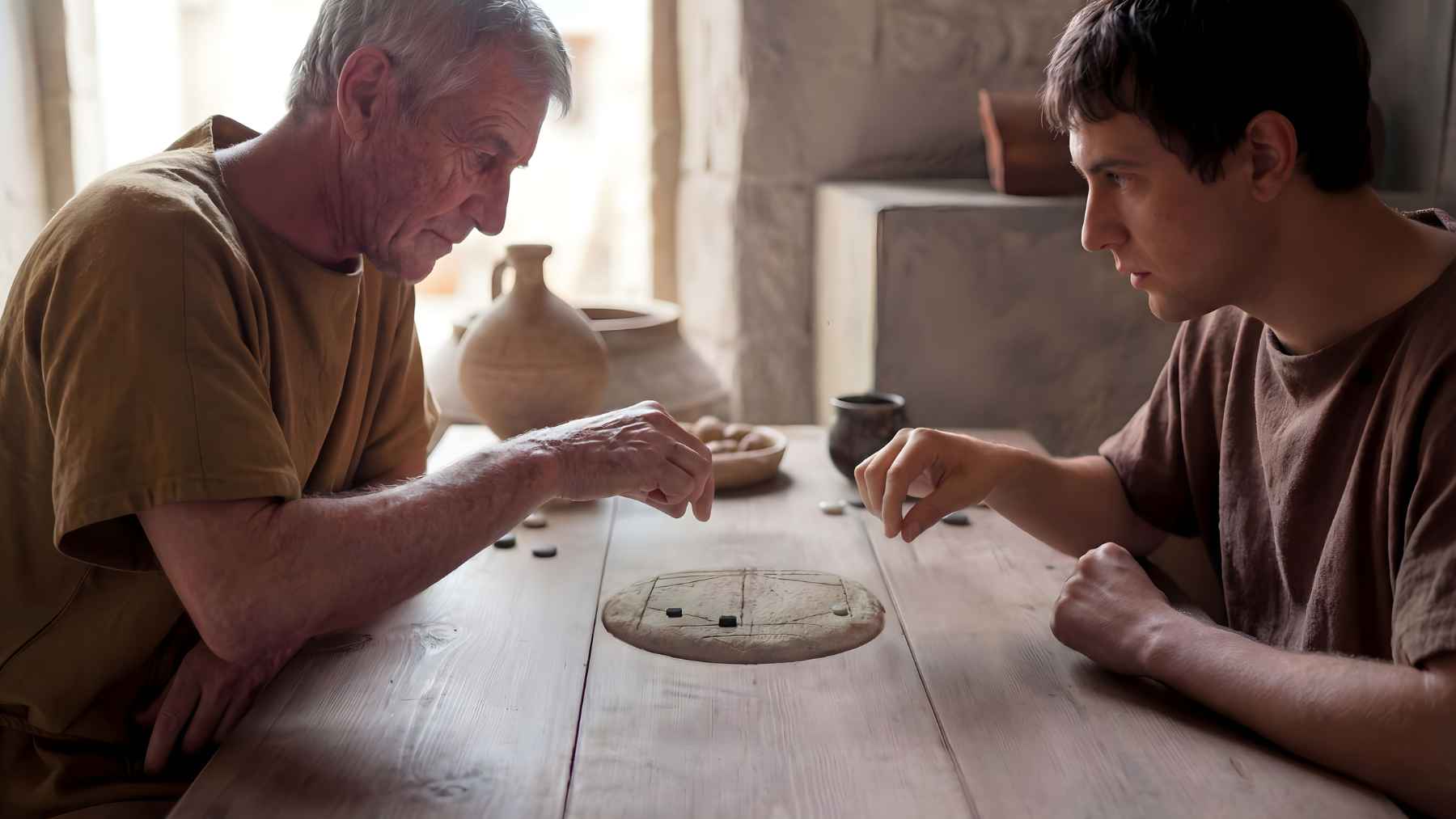
Archaeologists are turning to artificial intelligence to decipher a 2,000-year-old Roman inscription, and what’s written on the stone could change everything we thought we knew about an ancient lost game
Publish Date: 2026-04-08 16:00:00
Source Domain: www.ecoticias.com
- The article discusses a limestone slab from a Dutch museum, known as “Object 04433”, which was previously unidentified.
- Researchers concluded that the artifact was most likely a Roman game board, using microscopic wear analysis and artificial intelligence simulations.
- The unique shape of four diagonals and one straight line on the stone’s surface prompted much debate, but wear patterns indicate it was used for a game.
- An AI system called Ludii helped the researchers simulate game rules based on the stone’s wear, leading to the discovery that it was likely a game board used in a blocking strategy.
- The artifact suggests that the tradition of blocking games existed in Europe during the Roman era, even earlier than previously documented.
- The study implicates the repurposing of architectural stone, commonly used in the Roman era, indicating that the artifact might be a reused decorative piece.
- Researchers believe that non-invasive methods like imaging and simulations can aid in identifying other historical objects, contributing to digital conservation efforts.
- While AI is a powerful tool, it relies on human-defined rules and acknowledges that player variations can affect interpretations of wear.