How Penn Engineering is working to safely scale AI agents to the physical world
How Penn Engineering is working to safely scale AI agents to the physical world
https://www.thedp.com/article/2026/03/penn-engineering-swarm-artificial-intelligence-safety-research
Publish Date: 2026-03-26 23:10:00
Source Domain: www.thedp.com
-
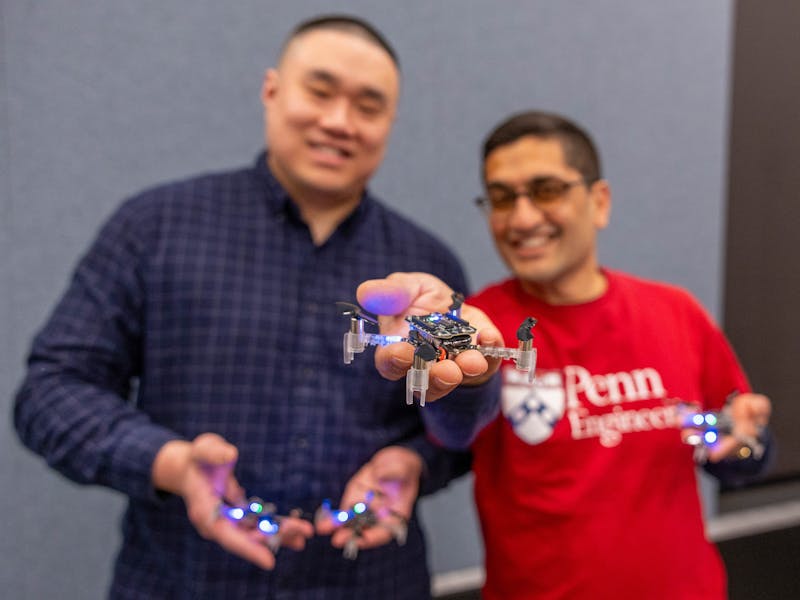
Project Launch: Researchers at Penn Engineering’s xLab have commenced a new project to integrate artificial intelligence agents safely into the physical world.
-
Leadership: The initiative is led by Professor Rahul Mangharam from Electrical and Systems Engineering, who aims to explore the operation of large groups of AI agents.
-
Focus on Life-Critical Systems: The current goal of the team is to devise algorithms that incorporate AI and machine learning in “life-critical systems,” which are essential and potentially high-stakes environments.
-
Challenges of Scaling: While virtual agents are easier to scale, physical agents require ensuring spatial and reactive safety to prevent collisions, a challenge as algorithms don’t commonly scale beyond a single digit number of agents.
-
Real-World Constraints: Researchers face scaling challenges from hundreds to thousands of agents, needing to address real-world constraints like communication delays and human-AI interaction difficulties.
-
Developing Autonomous Teams: The team aims to understand how to scale these systems for agents to develop skills independently and collaboratively decide problem partitioning.
-
Bridging Theory and Practice: One of the biggest barriers is translating theoretical developments into practical applications for physical systems such as drones and vehicles, which has been historically difficult.
-
Future Applications: The research holds potential for areas such as aerial transportation and air traffic control systems, with a specific goal to ensure the safety and effectiveness of physical AI systems.