Artificial intelligence-guided design of LNPs for in vivo targeted mRNA delivery via analysis of the spatial conformation of ionizable lipids
https://www.nature.com/articles/s41551-026-01640-8
Publish Date: 2026-03-18 20:59:00
Source Domain: www.nature.com
-
Advancements in mRNA Delivery Systems: The article highlights numerous advancements in the development and application of mRNA nanomedicines for various therapeutic purposes, including cancer therapy and gene editing.
-
Role of Lipid Nanoparticles: The importance of lipid nanoparticles (LNPs) in protecting mRNA and facilitating its delivery into cells is underscored, along with the development of specialized LNP formulations that target specific organs or tissues.
-
Applications in COVID-19 Vaccines: Significant progress is noted in mRNA technologies, demonstrated through the successful development and deployment of mRNA vaccines for COVID-19, showcasing mRNA’s potential in infectious disease treatment.
-
Integration with CRISPR Technology: Recent work is detailed on combining mRNA delivery systems with CRISPR gene-editing technologies for precise and effective genetic modifications.
-
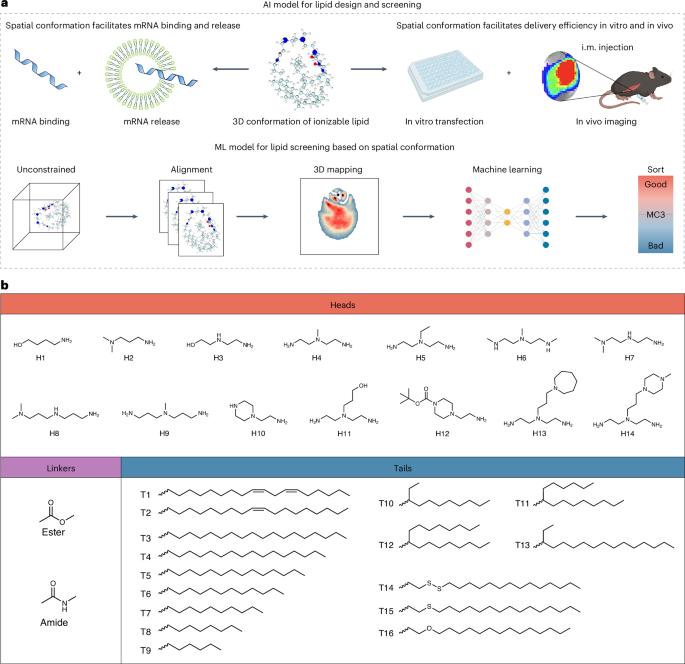
Use of Machine Learning in mRNA Delivery: The integration of machine learning and computational methods to accelerate the development of new ionizable lipids and improve mRNA delivery efficiency and specificity.
-
Therapeutic Potential Beyond Vaccines: Expanding applications of mRNA technology beyond vaccines include treating various cancers and other diseases by enabling targeted therapeutic RNA delivery.
-
Immune Response Considerations: Research is underway to understand and mitigate immune responses triggered by mRNA nanomedicines, aiming for safer applications without unwanted side effects.
-
Structural and Functional Innovations: Continuous advances in designing novel lipids and nanoparticles to enhance the stability, efficiency, and biodistribution of mRNA therapies.