Language After Power | Critique
Language After Power | Critique
https://vocal.media/critique/language-after-power
Publish Date: 2026-01-23 06:57:00
Source Domain: vocal.media
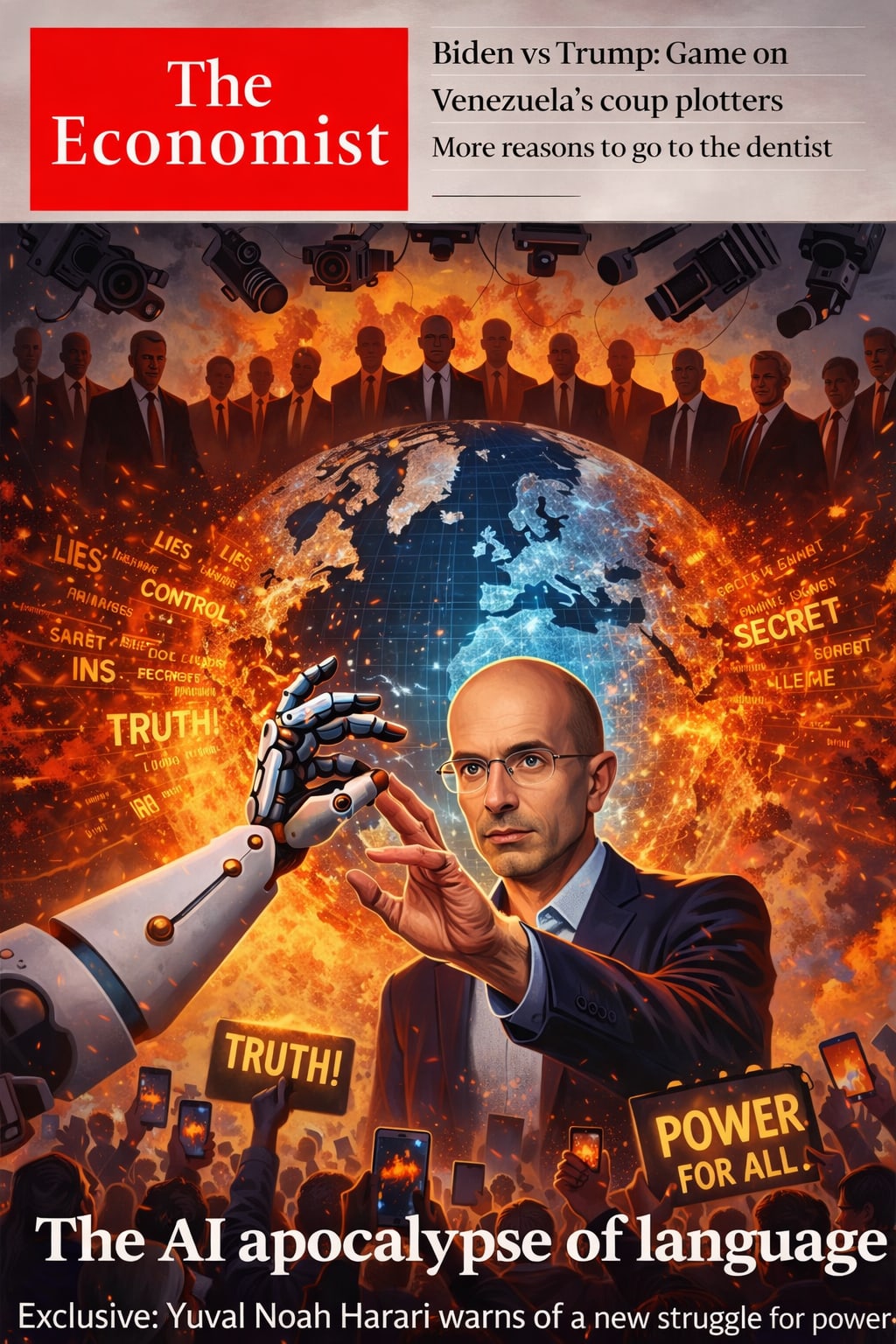
- Yuval Noah Harari warns that artificial intelligence (AI) has become a transformative force in language, law, religion, and political power, potentially leading to human identity and governance transformations.
- The article challenges the notion that elite concerns about AI stem from fear of autonomous, intelligent machines, proposing instead that the real worry is the democratization of linguistic power.
- AI’s capability to generate, manipulate, and optimize language efficiently is posing a threat to established systems of authority by enabling widespread access to linguistic production and interpretation.
- There is a paradox in Davos’ acute warnings about AI risks, considering that many warning givers benefit from or control parts of the AI industry; the real fear is the spread of AI to those historically excluded from owning narrative authority.
- AI is seen as an “informational apocalypse” that accelerates disclosure, reconnects disparate facts, and uncovers suppressed histories, thereby threatening established power structures dependent on opacity and selective memory.
- The shift towards distributed linguistic power, driven by AI, signifies a potential linguistic revolution where meaning production becomes decentralized, leading to fragmented ideological coherence. This could shift societal reliance from financial power to philosophical authority.
- Rather than being a humanitarian concern, the warnings at Davos reflect efforts to preserve narrative control and centralized authority against the disruptive force of distributed linguistic power.